
How to Search Civil Dockets
Start any Gallia County civil docket search with the court, not a statewide database. For Common Pleas matters, use the trial court's own route. The Gallia County Court of Common Pleas posts a Gallianet eAccess Case Search link. The form sits behind a browser gate. Do not assume particular party-name fields, case-number boxes, or filters until the screen shows them. Use only the choices the official route actually presents.
Gallipolis Municipal Court offers its own route, the CaseLook Record Search, for municipal records. The notice warns that postings can lag court action. Lag can run at least 24 hours or longer. It directs anyone needing verified information to the court or to a written request. Both systems help locate a civil case. Neither stands in for a clerk-issued copy or direct confirmation of a current setting.
- Read the court name on the civil notice, complaint, order, or case paper.
- Use eAccess for Common Pleas matters and CaseLook for Gallipolis Municipal civil matters.
- Follow only the live search controls displayed by the official system.
- Confirm the returned court, caption, case type, and newest docket entry against the paper record.
- Ask the relevant clerk for inspection, a copy, certification, or a current setting when needed.
Gallia Civil Docket Search Limits
Gallianet eAccess is the official Common Pleas route. The court does not document its fields, result columns, document images, exports, or case-number format in advance. Open the Case Search route. Use the on-screen options. Read whatever caption, court, and status the system returns, and ask the Legal Division to verify a record you need. Treat any outside interface description as unreliable for a Gallia County civil docket search.
CaseLook carries its own limit. A disclaimer precedes the municipal search and warns that court activity can post late. The online route locates a civil case; the clerk keeps the maintained record and fills a verified-copy request.
Gallia Civil Dockets by Court
A Gallia County civil docket sits in one of two places. The General Division of the Gallia County Court of Common Pleas handles general civil, non-criminal disputes. Gallipolis Municipal Court hears civil cases below the statutory monetary limit. It also takes small claims and evictions. Get the court right. That choice controls the online route and the clerk. It also sets the fee schedule and the rules shaping the docket.
| Court | Civil docket scope | Record path |
|---|---|---|
| Gallia County Court of Common Pleas General Division | General civil matters outside the exclusive jurisdiction of lower courts. | Gallia County Clerk of Courts Legal Division and Gallianet eAccess. |
| Gallipolis Municipal Court | Civil matters below the statutory limit, small claims, and evictions. | Municipal Clerk and CaseLook Record Search. |
For the Municipal Court monetary limit behind this division of civil dockets, Ohio Revised Code 1901.17 is the statute to read. It states the limit in its own terms. Statutory exceptions still control.
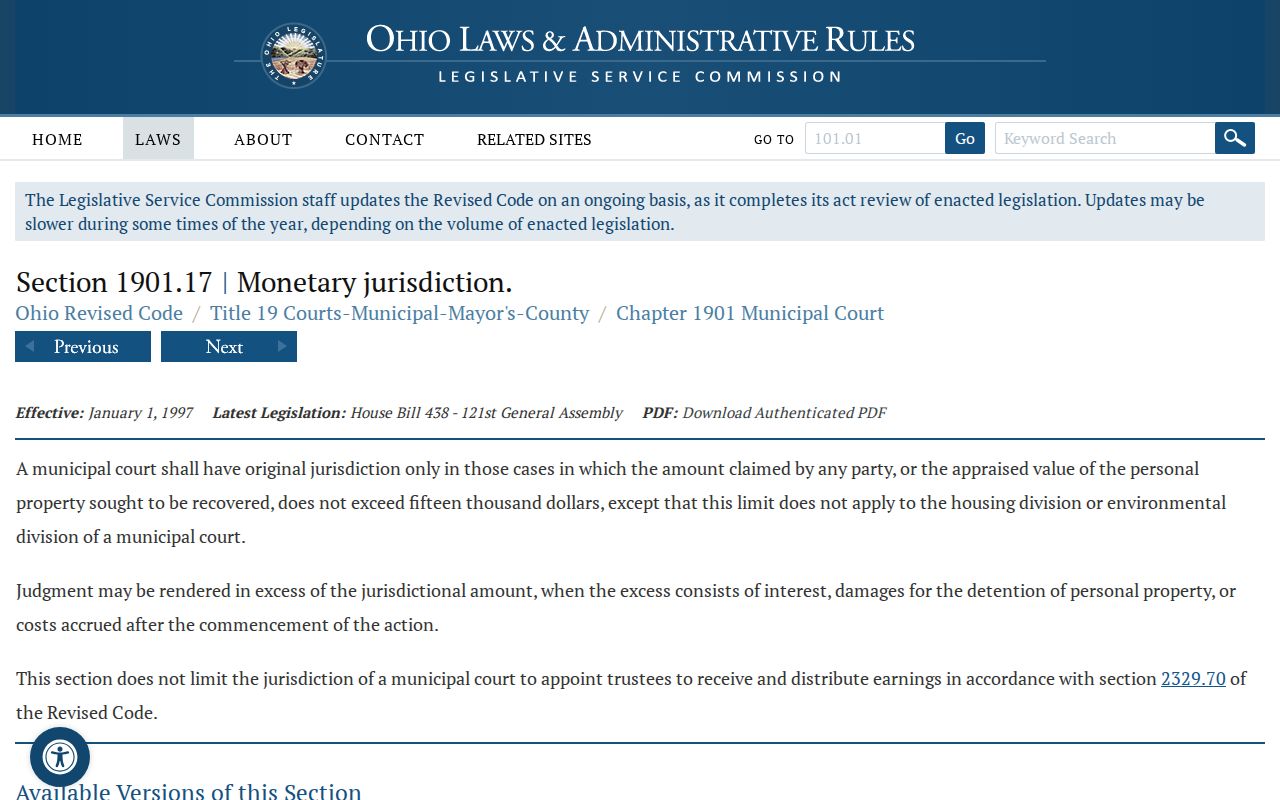
The statute caps municipal civil cases at $15,000, with statutory exceptions still controlling. The dollar amount alone is not a complete court-selection rule. For Municipal Court subject-matter jurisdiction, the controlling source is Ohio Revised Code 1901.18.
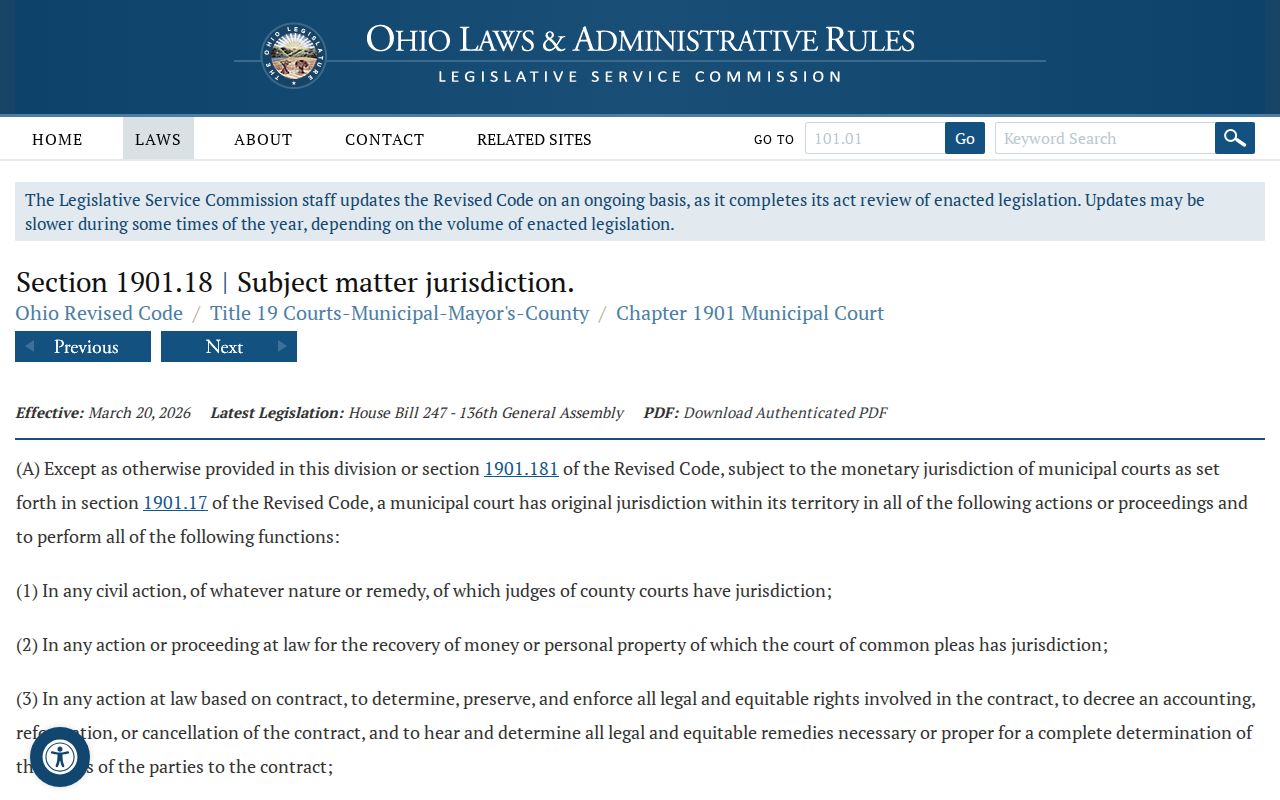
The municipal court's published jurisdiction covers civil, small-claims, and eviction work. Before filing, follow the court's current forms and rules rather than a dollar amount alone.
What a Civil Docket Shows
Common Pleas local rules use a name for the running record. They call it an appearance docket. They also require a computer record for each pending General Division case. Read a Gallia County civil docket at the field level. Look for the case and the assigned judge. Check the purpose of each filing and the dates that can alter the case path. The record should mark a case-ending entry as a judgment, final entry, or dismissal entry. Keep one distinction in mind: a filing alone is not a final court ruling.
| Case number | The court identifier. The rules say General Division cases are categorized civil or criminal and serially numbered annually, but the public online display format was not verified. |
|---|---|
| Assigned judge | The judicial officer shown on the Common Pleas appearance docket. |
| Filings and entries | The nature or purpose of filings, notices, orders, and other recorded action. |
| Schedule details | Pretrial, trial assignment, mailed-notice, and continuance information held in the pending-case computer record. |
| Case ending | A judgment, final entry, or dismissal entry, with the final-entry date recorded for the General Division case. |
For the appearance-docket and computer-record requirements, the Common Pleas local rules state them directly. The same rules govern how General Division entries are kept. CaseLook's detail fields and document availability for municipal cases should be confirmed on the screen rather than assumed.
Gallia Civil Docket Scheduling Order
In a Common Pleas civil case, the scheduling order is the practical roadmap. Local Rule 2.07 sets the trigger. The court schedules a conference once all defendants answer. The resulting order fixes deadlines for motions, discovery, exchange of materials, final pretrial, and trial. Those dates stay set. The court changes them only for good cause on a motion. So read a Gallia County civil docket from the newest scheduling order or continuance. An older notice is not enough. For Common Pleas general civil jurisdiction, Ohio Revised Code 2305.01 is the statute that controls.
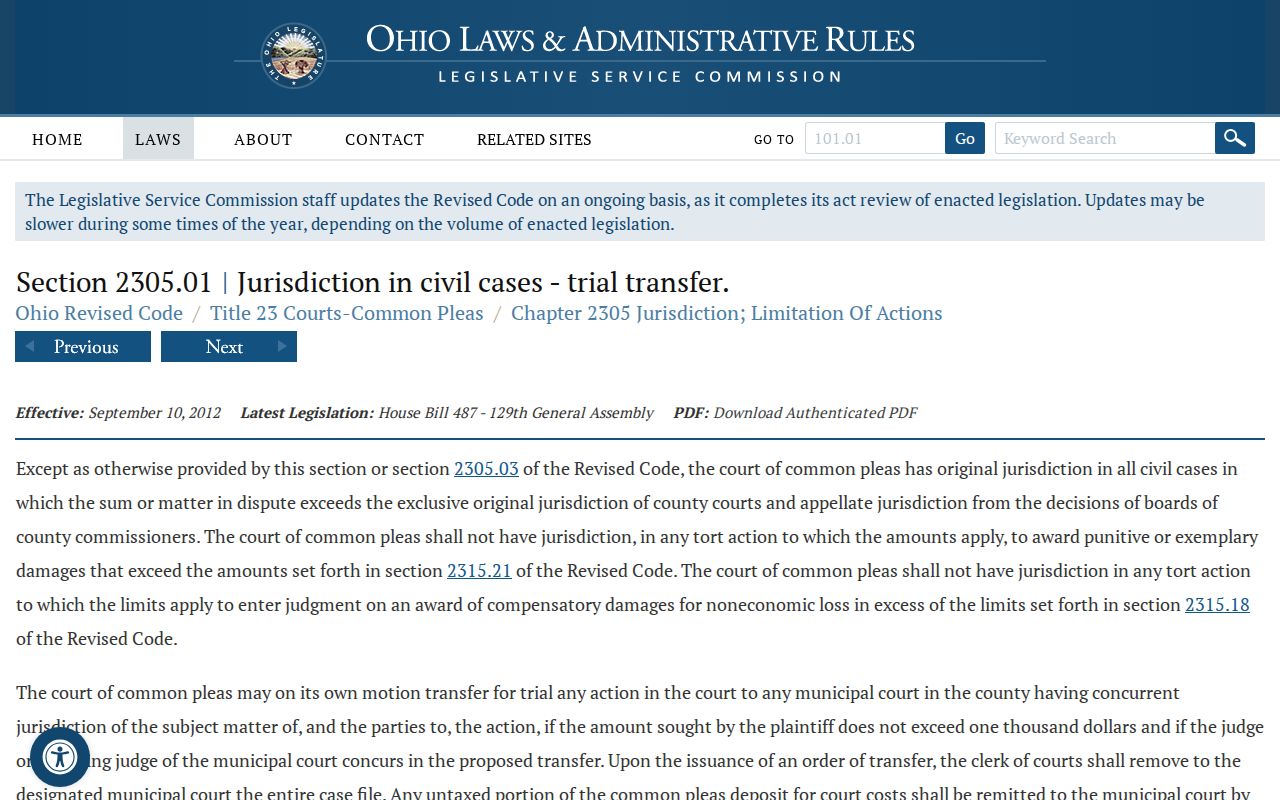
Common Pleas holds original civil jurisdiction beyond what lower courts hold exclusively. That line explains why the Gallia municipal docket is not the county's complete civil docket. Note: The latest docketed order beats an earlier civil notice whenever a deadline or hearing may have moved.
Types of Civil Cases on the Docket
Gallia County civil dockets reflect the divisions that keep them. Common Pleas Rule 1.17 lists General Division record categories. They include administrative appeal, foreclosure, declaratory judgment, injunction, medical or legal malpractice, other tort, personal injury, product liability, professional tort, and workers' compensation. Gallipolis Municipal Court keeps its own matters. They include civil, small-claims, and eviction cases. Read any case label in light of the court that assigned it.
- Common Pleas general civil matters, including the rule-based General Division categories.
- Common Pleas Domestic Relations matters, held within the court's separate division.
- Gallipolis Municipal civil cases below the statutory monetary limit.
- Gallipolis Municipal small claims cases.
- Gallipolis Municipal eviction proceedings.
For the family-law side of the civil docket, The Common Pleas Domestic Relations page is the official source.
Domestic Relations cases sit inside Gallia County's Common Pleas structure. Even so, getting a look at a specific filing still turns on court rules, any restrictions that apply, and the record you ask for.
Gallia Municipal Civil Filing Fees
Gallipolis Municipal Court keeps its own civil fee schedule. It took effect January 1, 2025. A civil complaint runs $200, which covers the first certified-mail service and a few routine steps along the way. Personal service and a jury cost extra. Small claims is $97, plus a stated charge for each added defendant or service. An eviction or F.E.D. filing runs $168. None of these figures tell you a case's full cost, and none of them apply to Common Pleas.
| Gallipolis Municipal filing | Published amount |
|---|---|
| Civil complaint | $200, subject to the schedule's listed inclusions and exclusions |
| Small claims | $97, plus the schedule's stated additional defendant or service charge |
| Eviction or F.E.D. filing | $168 |
For the numbers behind a Gallia County civil docket filing, Gallipolis Municipal Court's civil fee schedule posts the court's current costs.
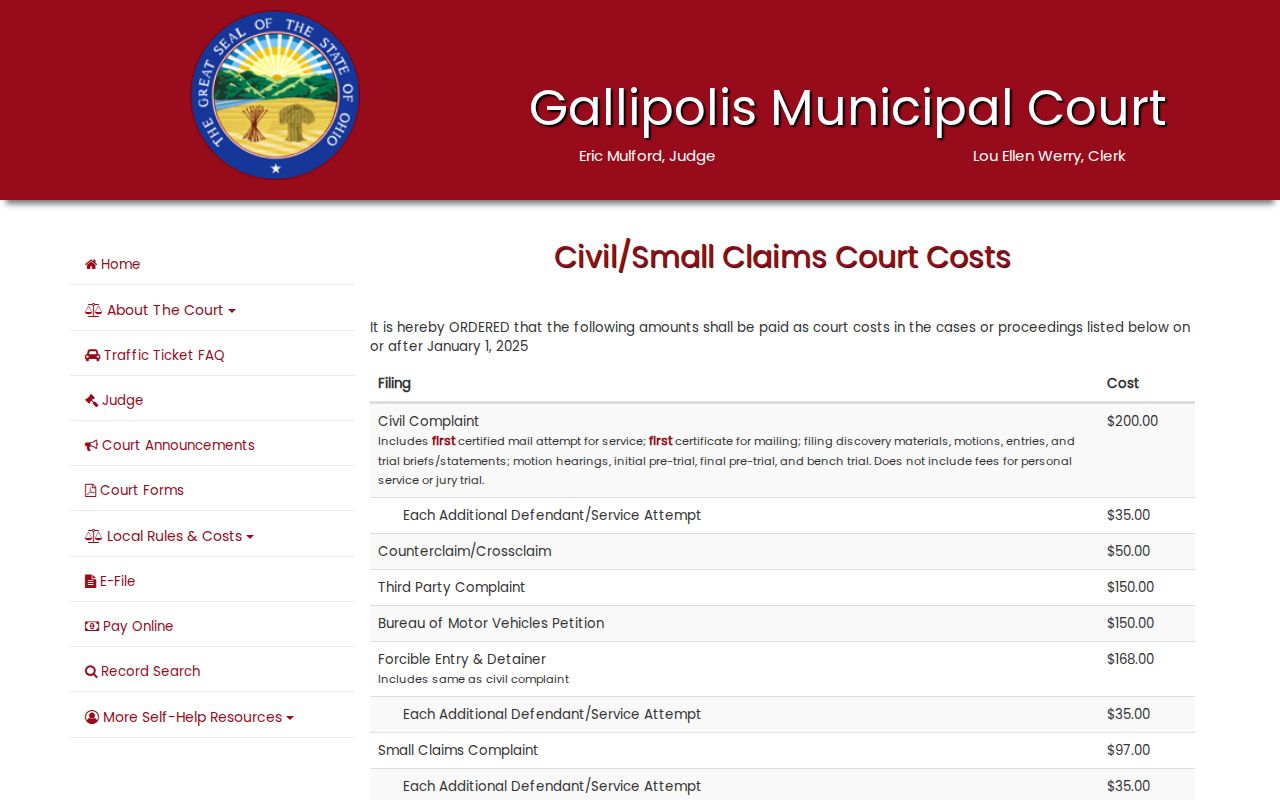
The schedule also prices other civil filings, post-judgment work, copies, and appeal deposits. Check it before you file, because those figures belong to Municipal Court alone.
Settings and Hearings on Civil Dockets
A date on a civil docket can signal several things. In Common Pleas, a scheduling conference produces a scheduling order. From there, the record may fill with entries. Those cover motion, discovery, pretrial, trial-assignment, and continuance filings. Gallipolis Municipal Court posts a Hearing Calendar and Court Schedule. Its pretrial path can run through initial pretrial, then final pretrial, then trial settings. Treat a displayed date as a clue. It never excuses you from checking a later entry.
- Scheduling conference
- A Common Pleas civil conference that leads to deadlines and final-pretrial or trial settings.
- Continuance
- A court-approved change to a date. Common Pleas rules require continuance details in the computer record.
- Final pretrial
- A municipal stage at which the court considers whether a case has resolved or will proceed to trial.
For a Municipal Court setting, the CaseLook Hearing Calendar gives a useful planning view. Verify the date against the record or the clerk, though, since the CaseLook Record Search disclaimer warns that postings can lag.
Gallia Civil Docket Date Changes
When a civil date moves, trust the newest court action first. In Common Pleas, the dates in a scheduling order hold unless the court changes them for good cause on a motion. The pending-case computer record keeps continuance details. In Municipal Court, the Hearing Calendar and Court Schedule help you spot a possible setting. The court warns that postings run behind, so confirm any time-sensitive date with the clerk or the individual record. Keep your case number handy. Ask for the current setting, not legal advice. The notice you received plays one role. The latest docket entry and the clerk's confirmation each play another once a date has changed.
Gallia Municipal Civil eFiling Limits
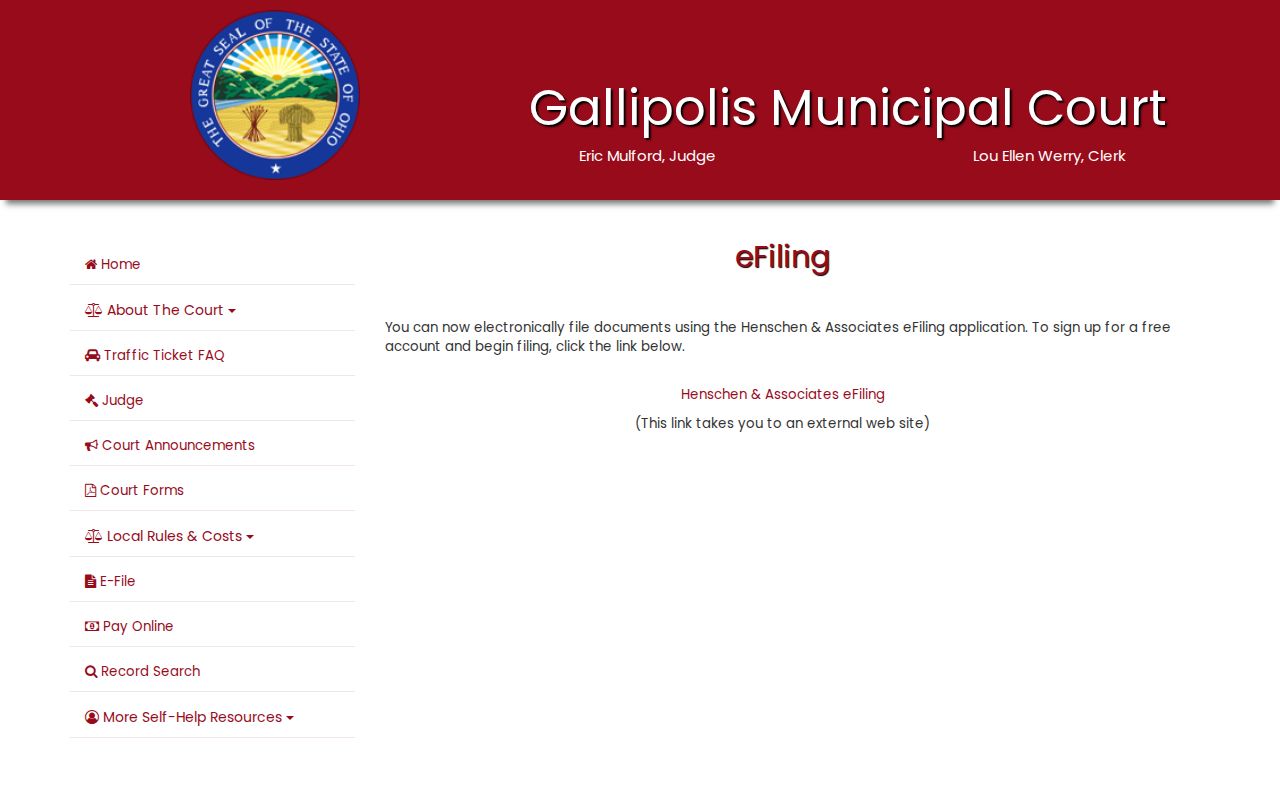
Gallipolis Municipal Court says electronic filing starts with a free Henschen & Associates account. That tells you a route exists. It does not tell you which documents every user may submit, which filing time controls, or whether a submission was accepted. The local fax rule is narrow too. It allows fax filing in civil and small-claims matters. But a complaint that opens an original action is excluded. So is any other initiating paper. For the details behind this Gallia County civil docket, Gallipolis Municipal Court's eFiling information page spells out the court's current process.
Save the court's acceptance confirmation, then watch for the newest docket entry. A fax rule never replaces the current filing instructions for a document that starts a case.
Gallia Civil Docket Filing Status
Opening an electronic filing account is one event. Sending a document and spotting a docket entry are two more. The eFiling page at Gallipolis Municipal Court confirms how to begin. It does not guarantee acceptance for every document class. A Rule 14 fax submission is no authority either. It cannot launch an original action by fax. After the court processes a filing, the case docket is where to look. It should carry an acceptance or deficiency notice. It may also show an assigned case number, a setting, or an order. Hang onto the date and confirmation tied to your submission. If a deadline, initiating filing, or fee is at stake, take care. Use the court's current instructions or call the clerk. Never rest a conclusion on an online status alone.
Gallia Civil Docket Copy Requests
A plain copy, a certified copy, and an exemplified copy are three different requests. Common Pleas Rule 1.13 lets you inspect original documents or files. These are held by the Legal Division Clerk during regular hours. Originals cannot leave the court. The rule requires a photocopy fee without stating the amount. Ask the Gallia County Clerk of Courts Legal Division at 18 Locust St., Gallipolis, Ohio 45631, (740) 446-4612. Ask about the case, document, delivery method, and certification. Municipal Court sets its own prices. Its local rule charges $0.10 per printed public-record page. Its civil schedule lists $3 for a certified copy. An exemplified copy runs $10. Those figures cannot be carried over to a Common Pleas request. Send the request to the court that keeps the docket. That matters above all when an official seal or higher authentication is involved.
Public Access to Civil Dockets
Ohio's court-record framework presumes public access. That presumption does not promise every civil filing, image, historical record, or restricted record will show up online. The gap matters in Gallia County. There, eAccess sits behind a browser gate, CaseLook warns about timing, and a court clerk holds the official file. Remote search can help you locate a record. Direct inspection and a targeted copy request are separate channels.
Key Rules:
Ohio Rules of Superintendence 44 through 47 define court records, distinguish direct and remote access, and establish the presumption of access and restriction process.
Ohio Revised Code 149.43 is the Public Records Act, but court-file access is chiefly governed by the Supreme Court's public-access rules.
Restricted material, personal identifiers, sealed matters, and records limited by court order are not made public merely because a related case caption can be located.
Ask for the specific civil document or entry you need. Clerks cannot research a whole case history for you. Court staff can explain how to locate or obtain a record. They cannot tell you how to run your case. If a Common Pleas copy fee matters, confirm it with the Legal Division. The same goes for a certification requirement. The Municipal Court schedule will not answer for Common Pleas.