
How to Get Court Records
Match the record to its court first. The notice, ticket, or filing usually names it. For Common Pleas cases, the Gallianet eAccess Case Search is the published online route. Court-authorized CaseLook offers the Municipal Court Record Search, Hearing Calendar, and Court Schedule. Ohio has no single statewide trial-court search covering every county. An online hit helps you locate a case. Still, only the clerk can provide a certified court record.
The Common Pleas Legal Division accepts requests in person, by phone, email, fax, or mail. Courts here do not promise one universal request procedure. So ask the clerk directly how to send a clearly identified item. Municipal Court takes the same approach. For verified information, visit or send a written request, or use the general phone line.
- Identify the court and the finite record needed, such as a dated entry, final entry, or copy of a filing.
- Use eAccess for a Common Pleas case or CaseLook for a Municipal Court case or setting.
- Give the clerk the case number, document title or date, copy type, and preferred delivery method.
- Ask which request channel and fee apply before mailing, emailing, faxing, calling, or visiting.
- Request a plain, certified, or exemplified copy only after the office confirms what it can provide.
Gallia County Court File Inspection
Common Pleas Local Rule 1.13 makes the Legal Division Clerk the fallback. That applies whenever the online appearance docket leaves a question unanswered. You may examine an original document or case file at the office. This holds during regular business hours. Removal is not allowed. Copies come after the photocopy fee, in a reasonable time, with the office aiming for a 24-hour response. That target is an effort standard rather than a promise of same-day service.
The online Common Pleas search link is official. Still, individual live search fields may not always behave the same for every visitor. For anything not visible online, rely on the Common Pleas local rules and the clerk. A case file often holds more than the public docket entry shows. Some material inside it can still be restricted.
Note: Permission to inspect a file is never permission to remove it. It is also never permission to record inside a courtroom.
Types of Court Records
Whichever court owns the case sets the record route. The Legal Division keeps the Court of Common Pleas General and Domestic Relations docket and also serves the Fourth District Court of Appeals. Gallipolis Municipal Court maintains its own countywide municipal records. Probate and Juvenile sit in a separate office. Juvenile files cannot be treated as ordinary public docket material.
- Common Pleas appearance dockets, filings, entries, orders, and final judgments.
- General Division civil and felony case materials kept by the Legal Division Clerk.
- Domestic Relations records, subject to applicable rules, protections, and orders.
- Municipal Court traffic, misdemeanor, civil, small-claims, eviction, and preliminary-felony records.
- Probate records through the separate court office, with Juvenile records subject to confidentiality rules.
For Gallia County court records, start with one detail above all: the court name on the filing or ticket. It tells you which office to ask.
Gallia County Court Record Custodians
No single county database holds every Gallia County court record. The Common Pleas clerk keeps the General and Domestic Relations docket. The Municipal Court clerk holds the municipal record. The Probate/Juvenile office maintains its own work. Pick the court first. You avoid sending a request to an office that does not own the file.
| Record location | Published route | Key access point |
|---|---|---|
| Common Pleas General and Domestic Relations | Gallianet eAccess and Legal Division | Appearance docket and clerk-held file |
| Gallipolis Municipal Court | CaseLook and Municipal Clerk | Record Search, calendar, or written request |
| Probate and Juvenile | Separate Probate/Juvenile office | Record-specific procedure; Juvenile access is confidential |
The county public-records policy covers county administrative records. It is not a one-size-fits-all form for a court case file. Ohio court access is chiefly governed by the Rules of Superintendence plus each court's own record procedure.
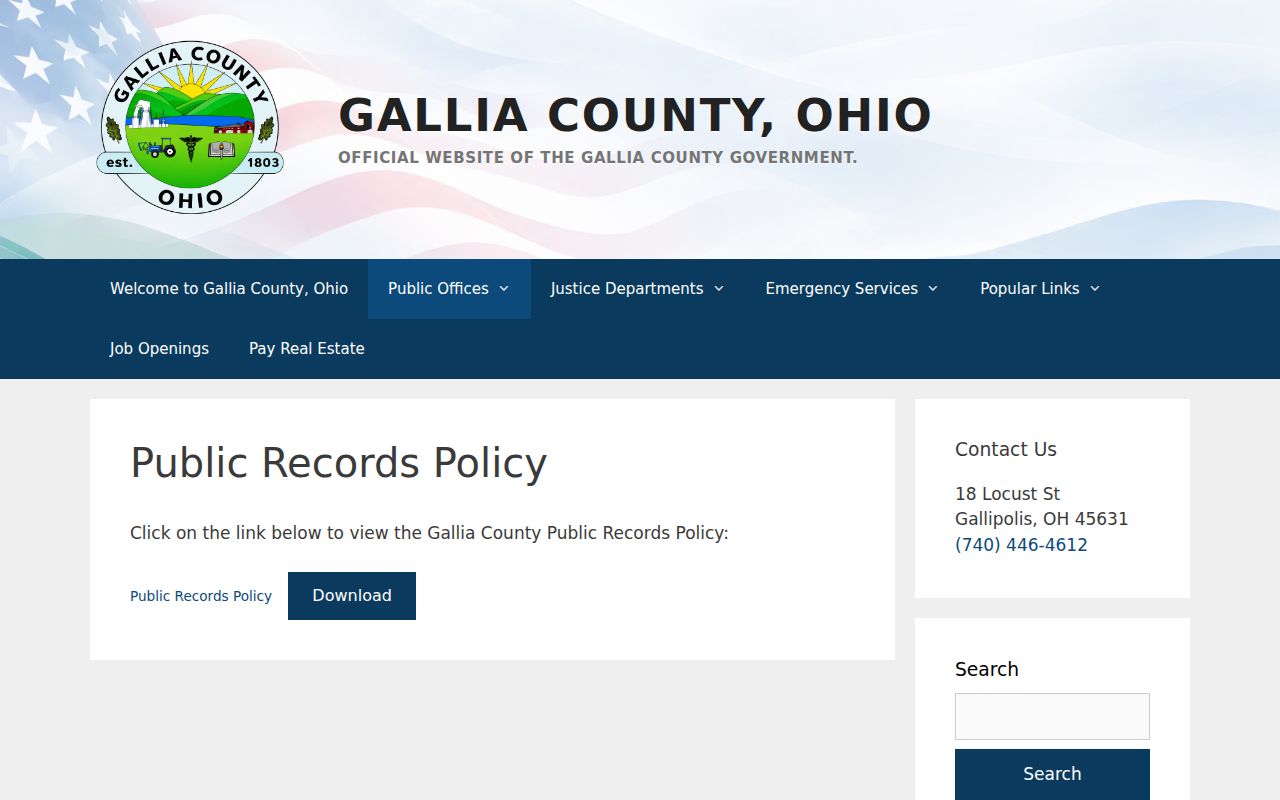
The policy page works well for county administrative material. A targeted court-file request belongs with the clerk or court that maintains the record itself.
Gallia County Court Record Updates
The Municipal Court's local rules appear in a file labeled November 4, 2025. Before relying on a fee or form, check the effective date printed beside it.
What a Court Record Contains
A court record might be the running docket. It might be one particular filing, or the entire clerk-maintained case file. In Common Pleas, the local rules use the term appearance docket for the running record. It shows the assigned judge and the nature or purpose of each filing. For a pending General Division case, the computer record also captures case-management facts. Municipal Court calls its online path Record Search. The fields and download options it offers may vary.
| Case number | The court's identifier; Common Pleas cases are categorized and serially numbered within the year. |
|---|---|
| Appearance docket | A chronological record of filings and actions, including the assigned judge and filing purpose. |
| Case settings | Recorded dates can include pretrial, assignment, trial, continuance, verdict or decision, and final entry. |
| Filed documents | Pleadings, motions, notices, orders, judgments, and other materials maintained by the clerk. |
| Case ending | Common Pleas entries may be marked as a judgment, final entry, or dismissal entry. |
Once you know which record you need, the Gallia County court clerk can say which available copy matches it.
Gallia County Court Record Redaction
Presumptive public access does not mean every detail appears in every format. Ohio's court-record rules draw a line between inspection or copying in person and remote access. They also shield certain identifiers. Social Security information, financial-account information, and some juvenile identifiers carry special protections. A redacted copy still shows the public court action without exposing protected data.
Ohio's Public Records Act matters for county administrative records. But it is not the main access rule for court case files. That role belongs to the Supreme Court's Rules of Superintendence. The record keeper can explain which access route exists. Yet the keeper cannot give legal advice about what a restriction means in your case. The current Public Records Act text is the official state reference for this administrative-records distinction.
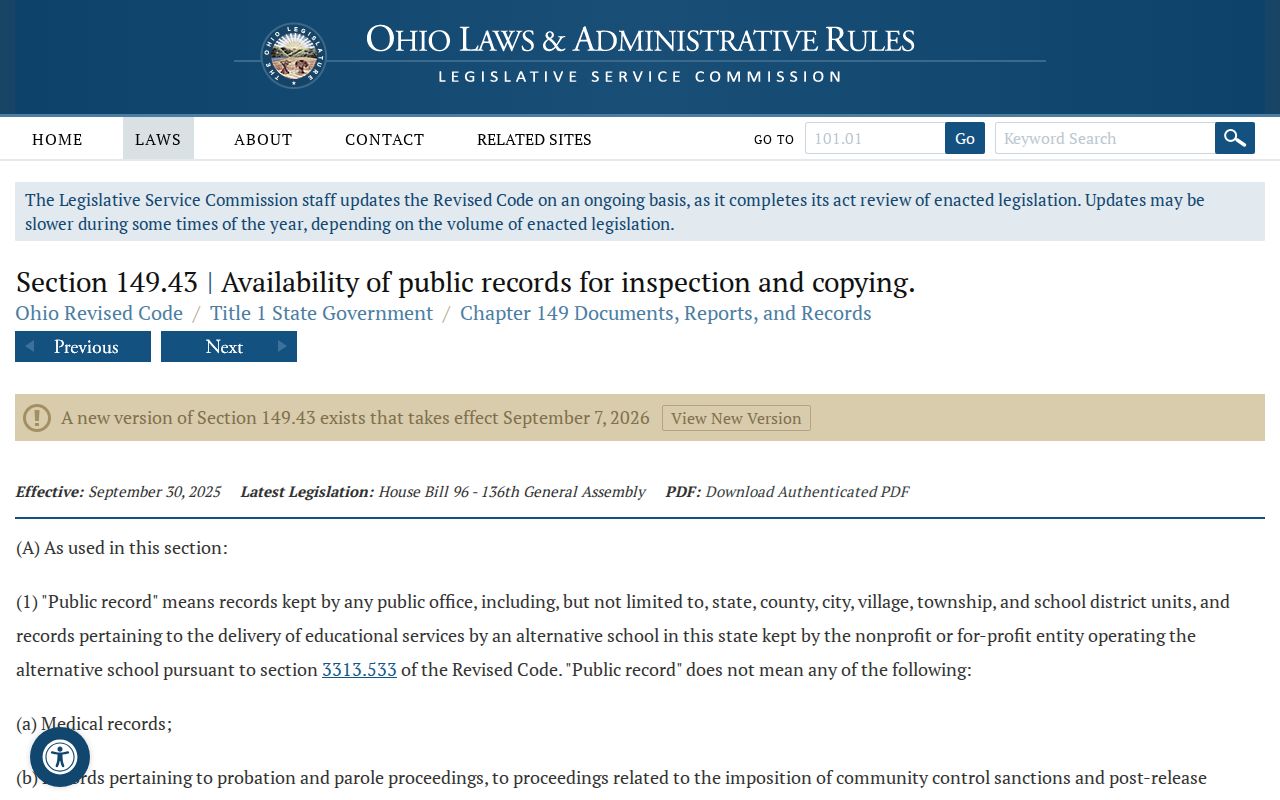
Redaction rules come from the court that holds the file, not from a blanket county policy. Start with that court's public-access rules and its clerk.
Certified Copies and Fees
Know your copy types before you pay. A plain copy just reproduces the record. A certified copy carries the clerk's certification, and an exemplified copy adds a higher form of authentication. Fees differ by court. The Municipal Court schedule posts its certified and exemplified copy prices, effective January 1, 2025. Common Pleas works differently. Rule 1.13 requires a photocopy fee, but the Legal Division must confirm the current amount and any certified-copy price. Do not apply Municipal Court prices to a Common Pleas file.
| Record or service | Published amount | Source and limit |
|---|---|---|
| Municipal Court printed public-record copy | $0.10 per page | Rule 13.1; reasonable-time standard |
| Municipal Court certified copy | $3.00 | Civil/Small Claims schedule, effective January 1, 2025 |
| Municipal Court exemplified copy | $10.00 | Same published schedule |
| Common Pleas copy, certified, or exemplified record | Confirm current fee | Rule 1.13 names a photocopy fee but not the amount |
Gallia County Clerk of Courts - Legal Division
18 Locust Street
Gallipolis, OH 45631
(740) 446-4612
Monday-Friday, 8:00 a.m.-4:00 p.m.
Before ordering any Gallia County court copy, ask the office two things. Can it provide the certification you need, and what is the current fee?
Gallia County Court Copy Requests
A narrow request works best. Name the court, case number, document title or docket-entry date. Add the copy type and delivery preference. That gives staff a workable starting point. Asking for one identified order or entry beats asking staff to dig through a person's full court history. Leave out Social Security numbers, bank details, and a juvenile's identity. Skip any private narrative the clerk never needs to locate a record.
Each court has its own path. The local rules set the printed-copy standard for Municipal Court copies. For Common Pleas, Rule 1.13 supports the examination and copy route. The Legal Division should confirm the current fee and delivery process. A phone call can clarify procedure. But it cannot replace a request with enough detail to identify the file.
Gallia County Court File Limits
Adult sealing and Juvenile confidentiality are two different limits. Mixing them up leads to bad requests. An adult record may qualify for sealing under R.C. 2953.32. But that statute does not make every adult record confidential from day one. Juvenile cases sit on the other side of the line. Gallia's Probate/Juvenile rules treat Juvenile cases as confidential. They are unavailable for public inspection without the judge's permission. A general online search gives no reason to presume a Juvenile record can simply be requested.
A separate statute governs sealing juvenile records. That is one more reason to keep a sealed record distinct from a confidential Juvenile file. Ask the court office which procedure applies. And never try to slip past a restriction with a broad county request.
Public Access and Sealed Records
Ohio court records are presumptively open under the Rules of Superintendence. That presumption bends to restrictions like redaction, sealing, confidentiality, and court orders. Rule 45 sets the starting point. But it does not require every historical file, document image, or entry to appear online. Direct access and remote access are separate things under the rules. When a portal runs incomplete or delayed, a narrow clerk request remains the local path.
Key Rules:
Ohio Rules of Superintendence 44-47 define court records, establish the public-access framework, set restrictions, and provide an access-remedy process.
R.C. 149.43, the Ohio Public Records Act chiefly concerns public records held by county offices and is not the primary rule for an ordinary court case file.
R.C. 2151.356 addresses juvenile-record sealing, alongside Gallia's local rule that makes Juvenile files confidential without judicial permission.
Any Gallia County court record request should name the court and the document. A public index never settles the access question by itself.
Gallia County Court Access Remedy
A denial or a murky restriction is not the end. The Supreme Court's public-access primer explains that Rules of Superintendence 44-47 include a process for seeking relief. That process guarantees nothing. It will not erase a lawful confidentiality rule or a sealing order. Nor will it force a particular release. What it does offer is a court-record access framework. That framework is more specific than treating every court file like a county administrative request.
Keep the request tied to the identified case and record. That focus lets the court decide whether the item is public. It also shows whether redaction applies, or whether another office actually holds the file.
Gallia County Court Research Library
The Gallia County Law Library sits on the second floor of the courthouse. It opens to the public for legal research during regular courthouse hours. Its materials help a reader parse a court rule, docket term, or statute. That can sharpen a focused request. It is not a checkout library. Nor does it replace the clerk's control of an original case file. The official Law Library page describes the public research setting and its no-checkout rule.
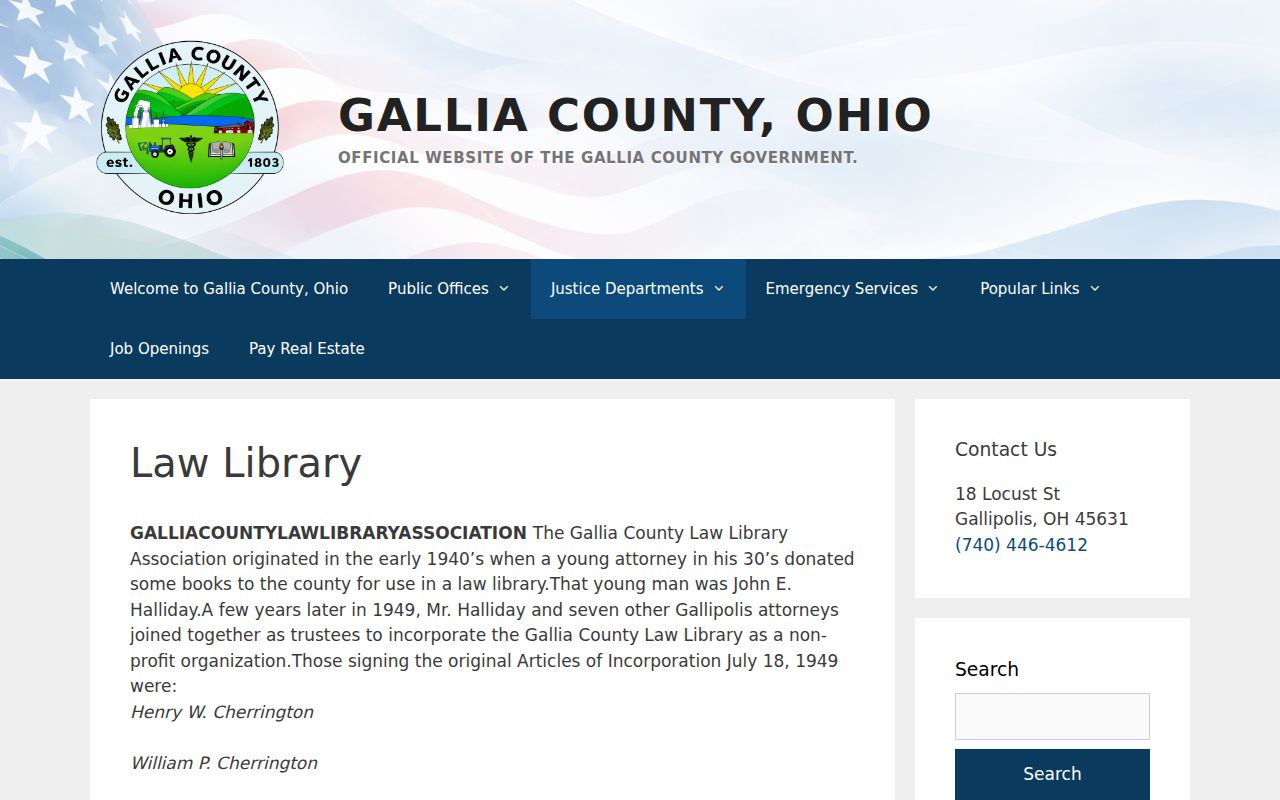
The library is a fine local fallback for understanding access rules. The court clerk remains the proper source for the record itself.